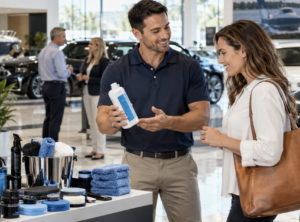
The automotive industry is changing, and car dealerships looking for additional revenue opportunities are beginning to think beyond vehicle sales, financing, and traditional service departments. One promising opportunity is selling boat detailing products to customers who already trust dealerships for vehicle maintenance, appearance protection, and professional-grade cleaning supplies. For dealerships located near lakes, coastal communities, marinas, and recreational boating destinations, marine detailing products could become a profitable addition to an existing parts and accessories business.
Car dealerships already have something many marine retailers spend years developing: established customer relationships, retail infrastructure, experienced salespeople, and the ability to recommend products that protect valuable investments. Expanding into boat cleaning supplies, fiberglass restoration products, marine coatings, and specialty detailing equipment gives dealerships another way to generate revenue without relying entirely on automobile transactions.
According to the National Automobile Dealers Association, franchised light-vehicle dealerships generated more than $164 billion in service and parts sales during 2025. That figure demonstrates the substantial role aftermarket products, maintenance, and service operations already play in automotive retail. Marine detailing products represent a potential extension of that established business model, particularly in markets where customers own both vehicles and boats.
🚗 Automotive Dealerships Need Revenue Opportunities Beyond Selling Cars
Selling automobiles remains the foundation of most dealerships, but successful automotive businesses understand that revenue diversification can provide greater financial stability. Vehicle sales fluctuate with interest rates, inventory availability, financing conditions, seasonal demand, and consumer confidence. Parts, accessories, maintenance services, and protective products offer opportunities to maintain customer relationships between vehicle purchases.
The broader automotive industry encompasses much more than manufacturing and selling automobiles. Repair services, accessories, modifications, and aftermarket products are established parts of the industry’s commercial ecosystem.
This creates an opportunity for dealerships to reconsider the limits of their retail operations. A customer purchasing a truck may also own a fishing boat. Someone buying an SUV might spend weekends towing a recreational vessel to the lake. Customers interested in ceramic coatings, polishing products, and paint protection for their automobiles may also appreciate effective solutions for maintaining fiberglass boats.
Instead of sending those customers to entirely different businesses, dealerships could introduce carefully selected marine detailing products within their existing accessories departments.
The objective is not to transform every car dealership into a marine supply store. It is to identify overlapping customer needs and offer products that make commercial sense for the dealership’s location, customer base, and available retail space.
💰 Why Boat Detailing Products Could Become a Profitable Automotive Retail Category
Boat detailing products offer several characteristics that make them attractive to automotive retailers. Many are consumable products requiring replenishment, while others address recurring appearance problems associated with sunlight, environmental exposure, oxidation, dirt, and water stains.
Unlike a vehicle purchase, which might occur only every several years, cleaning and maintenance products can generate repeat purchases throughout the boating season.
A dealership could offer fiberglass cleaners, marine surface protectants, polishing compounds, oxidation removers, microfiber towels, applicators, and specialty washing solutions. These products could be displayed alongside existing automotive detailing merchandise or organized into a small marine care section.
The financial appeal becomes particularly interesting when dealerships consider their existing infrastructure. Many already have parts departments, point-of-sale systems, inventory management software, storage facilities, and trained retail personnel. Adding a limited selection of marine products may require less investment than launching an entirely new service division.
However, profitability depends on wholesale costs, shipping, inventory turnover, competition, and actual customer demand. Dealers should evaluate these factors before committing to a large product assortment.
Research from Cox Automotive highlights the importance of fixed operations as a dealership growth opportunity. Its 2026 study reported average dealership service and parts revenue of approximately $9.23 million in 2025, even as dealerships faced growing competition for maintenance customers.
While this research does not specifically measure marine product sales, it reinforces the importance of building businesses that extend beyond the initial vehicle transaction.
🚤 Car Dealerships Already Serve Customers Who Own Boats
The relationship between automotive customers and boating enthusiasts is more direct than it might first appear.
Pickup trucks and SUVs are frequently used to transport boats, tow trailers, and carry recreational equipment. Dealerships selling these vehicles may already have relationships with customers who regularly visit marinas, boat ramps, fishing destinations, and waterfront communities.
A dealership selling a towing-capable truck, for example, could introduce customers to marine cleaning and protection products during the vehicle delivery process. Service advisors could also identify appropriate opportunities to mention available products when customers bring in vehicles equipped with boat trailer hitches.
This approach works best when recommendations are relevant rather than aggressive.
Customers visiting a dealership for an oil change may have little interest in marine detailing products. A customer purchasing a truck specifically for towing a fiberglass fishing boat, however, represents a much more relevant audience.
Dealerships could also explore partnerships with local marinas, boat storage facilities, fishing clubs, and professional marine detailers. These relationships could help automotive retailers determine which products customers actually need while introducing the dealership to additional buyers.
For stores located near major recreational boating areas, the potential audience may extend well beyond their existing automotive customer list.
🧽 Professional Boat Detailing Products Offer a Natural Connection to Automotive Appearance Care
Automotive detailing and marine detailing share several important principles, including surface preparation, contaminant removal, polishing, and protection from environmental exposure. Both industries serve customers who want their vehicles or vessels to maintain an attractive appearance while minimizing deterioration.
However, boats and automobiles are not identical, and dealerships should understand the differences before recommending products.
Fiberglass boats often feature gelcoat surfaces that require different maintenance procedures from automotive clearcoat paint. Marine products must also account for extended water exposure, salt contamination, oxidation, and prolonged ultraviolet radiation.
For these reasons, dealerships should avoid assuming that every automotive cleaning or polishing product is appropriate for a boat.
Manufacturers specializing in marine appearance restoration can help bridge that knowledge gap. For example, dealerships exploring professional-grade product categories can review solutions associated with a Boat Detailer to better understand the types of marine cleaning, restoration, and protection products available.
Products designed for fiberglass and gelcoat restoration can be particularly relevant to boat owners dealing with faded surfaces, chalky finishes, and weather-related deterioration.
A dealership that provides clear product instructions and recommends appropriate applications can position itself as a knowledgeable retailer rather than simply another store carrying bottles of cleaning chemicals.
📈 Automotive Parts Departments Can Benefit From Strategic Product Diversification
One of the advantages of marine detailing products is their potential compatibility with an existing automotive parts department.
Dealerships already sell products beyond replacement components. Many offer floor mats, vehicle protection supplies, cleaning products, cargo accessories, wheel care products, and other merchandise intended to enhance ownership.
Marine detailing merchandise could become another complementary category.
A sensible retail strategy would begin with a limited assortment selected around common maintenance needs. Products addressing routine washing, fiberglass oxidation, surface protection, and interior cleaning may have broader appeal than highly specialized commercial equipment.
Inventory performance should guide expansion decisions. Dealerships can measure how quickly products sell, whether customers purchase replacements, and which items generate sufficient gross profit after handling expenses.
Automotive industry research from Haig Partners reported that same-store fixed operations gross profit among publicly traded automotive retailers increased 7.5% during 2025. The findings underscore the continuing importance of parts and service departments to dealership financial performance.
Marine detailing products will not automatically deliver similar results, but they offer dealerships another category to evaluate within an established retail structure.
🌊 Coastal and Lakefront Automotive Dealerships Have a Geographic Advantage
Location is one of the strongest considerations when determining whether a dealership should sell boat detailing supplies.
A dealership near a major boating destination serves a different customer base from one in an area with limited recreational boating activity.
Florida dealerships, for example, may encounter customers who own center-console fishing boats, pontoon boats, personal watercraft, and larger recreational vessels. Automotive retailers near the Great Lakes or popular inland reservoirs may serve customers who regularly transport boats between storage facilities and launching locations.
Seasonality also matters.
Some regions enjoy substantial boating activity throughout the year, while others experience concentrated demand during warmer months. Dealerships should adjust product availability accordingly rather than maintaining the same inventory levels regardless of regional conditions.
Local market knowledge can provide another advantage. Dealership employees familiar with boating communities can recommend products suited to common maintenance concerns and explain why specialized marine formulations may be preferable for particular surfaces.
Automotive retailers serving these markets should consider how marine detailing products fit into the broader needs of recreational vehicle owners, rather than treating them as unrelated merchandise.
🤝 Selling Marine Products Can Create Additional Customer Loyalty Opportunities
Customer relationships are among a dealership’s most valuable assets. Every useful interaction provides another opportunity to build trust, demonstrate expertise, and encourage future business.
A dealership that helps customers maintain more than one type of vehicle may create additional reasons for customers to return.
Consider a truck owner who purchases marine detailing supplies from the same dealership that services the family vehicle. When that customer returns for more cleaning products, the visit can strengthen familiarity with the dealership’s staff and services.
Those interactions may support long-term customer retention, although selling marine products alone does not guarantee repeat vehicle purchases.
The importance of customer experience is reflected in Cox Automotive’s research on modernizing automotive service, which emphasizes stronger communication, connected service processes, and customer convenience.
For dealerships, the lesson is straightforward: useful products and dependable service can support relationships that continue long after the initial sale.
Marine detailing merchandise provides another possible point of contact, particularly when dealerships prioritize product education and customer satisfaction over short-term sales pressure.
📱 Digital Marketing Can Help Dealerships Reach Boat Owners Beyond the Showroom
A dealership does not need to rely entirely on walk-in traffic to sell marine detailing supplies.
An online storefront or dedicated website category can introduce boat cleaning and restoration products to customers who may never have considered purchasing marine merchandise from an automotive retailer.
Search engine optimization provides an especially useful opportunity because boat owners frequently research maintenance concerns before buying products.
A dealership could publish helpful articles explaining gelcoat oxidation, fiberglass cleaning methods, marine surface protection, and seasonal boat maintenance. Product pages could include clear descriptions, compatibility guidance, application instructions, and photographs demonstrating appropriate use.
Local search strategies could focus on relevant customer needs in nearby boating communities. A dealership with a marine care department in a waterfront region might create informational content addressing boat cleaning products available locally.
This type of marketing should remain accurate and genuinely helpful. Publishing large quantities of repetitive promotional pages is less valuable than creating resources that answer actual customer needs and connect readers with suitable products.
Coverage from Automotive News also provides a way for dealership owners to follow broader retail developments, including evolving customer expectations, dealership technology, and business diversification.
Dealerships that combine online product availability with knowledgeable in-store assistance may be better positioned to reach customers across both automotive and marine markets.
🛠️ Dealership Detailing Departments May Find Additional Business Opportunities
Retail sales are not the only potential benefit of carrying marine detailing products.
Some dealerships operate professional vehicle detailing departments that already employ technicians familiar with washing, polishing, surface preparation, and protective coatings.
Marine detailing requires additional training and appropriate products, but existing appearance-care experience may provide a foundation for evaluating whether limited marine services are commercially viable.
For example, a dealership might initially concentrate on selling marine cleaning supplies before considering partnerships with experienced marine detailing professionals.
Other businesses may prefer a referral arrangement rather than performing marine work themselves.
This distinction is important because servicing boats introduces practical challenges that conventional automotive detailing operations may not face. Vessel size, transportation, drainage, wastewater disposal, insurance coverage, workplace safety, and surface-specific training all require consideration.
Dealerships should not expand into marine detailing services without confirming that their facilities, staffing, and insurance arrangements support that work.
The lower-complexity opportunity for most automotive retailers is likely to begin with product sales, customer education, and relationships with qualified marine service providers.
🚀 How Car Dealerships Can Introduce Boat Detailing Products Successfully
Successful product diversification requires planning rather than simply adding merchandise to shelves.
Dealership management should first determine whether sufficient demand exists within the local customer base. Sales records showing strong pickup truck and towing-related accessory purchases may provide useful clues, but customer surveys and conversations can offer more direct evidence of marine product interest.
Next, dealerships should compare potential suppliers. Product quality, wholesale pricing, minimum order requirements, shipping expenses, available training materials, and customer support all deserve attention.
Manufacturers that provide detailed application instructions and clear product compatibility information can make it easier for dealership employees to assist customers.
A small pilot program may be preferable to a major inventory commitment. Dealers could test several commonly requested products, provide a clearly labeled display, and promote the new selection through existing customer communication channels.
Performance should be measured using actual sales results.
Gross margin, inventory turnover, average transaction value, repeat purchases, returns, and unsold seasonal inventory provide a more reliable picture of profitability than product popularity alone.
Dealerships should also review franchise agreements, supplier requirements, and applicable retail regulations before launching the category.
The goal is to create a manageable additional revenue source that complements the dealership’s existing operations.
🏆 The Future of Automotive Retail May Include More Lifestyle Products
The automotive retail business is increasingly shaped by how customers use their vehicles rather than simply which vehicles they purchase.
A pickup truck may be part of a customer’s boating lifestyle. An SUV might transport equipment for camping, fishing, or outdoor recreation. Accessories and maintenance products can connect automotive retailers with these broader activities.
Dealerships that recognize those connections can explore relevant merchandise without abandoning their core business.
Marine detailing products are particularly interesting because they build on an established consumer behavior: people spend money maintaining the appearance and condition of expensive recreational assets.
Recent automotive industry reporting from Reuters has highlighted how automakers are adapting to changing regional markets and customer preferences. Although these developments concern vehicle manufacturing and broader industry strategy rather than marine detailing specifically, they illustrate the importance of aligning automotive business decisions with the needs of local customers.
For dealerships in boating regions, that principle could support expanding into marine maintenance merchandise.
The opportunity is not universal. An urban dealership with few boat-owning customers may see little benefit, while a dealership serving a large recreational boating community could discover meaningful demand.
Understanding that difference is essential to making product diversification commercially worthwhile.
Conclusion: Boat Detailing Products Could Help Automotive Dealerships Build a Stronger Revenue Mix
Car dealerships have spent decades developing expertise in automotive sales, service, parts, and customer relationships. Those strengths may translate into opportunities beyond conventional vehicle merchandise, particularly when dealerships serve customers with overlapping automotive and recreational interests.
Selling boat detailing products offers a practical way for appropriately located dealerships to test a new product category without immediately investing in an entirely separate business. Marine cleaners, fiberglass restoration supplies, protective coatings, and detailing accessories can complement existing vehicle appearance products while introducing dealerships to additional customers.
The strongest opportunities are likely to exist where boating activity is substantial, dealership customers already own recreational vessels, and knowledgeable employees can recommend suitable products.
As competition continues to shape the automotive retail market, businesses that understand their customers’ broader ownership needs may discover new ways to strengthen existing relationships and generate incremental sales.
For forward-thinking dealerships, the next promising addition to the parts department might not be another automotive accessory. It could be the marine detailing product that helps a customer bring a weathered boat back to life. 🚗🚤