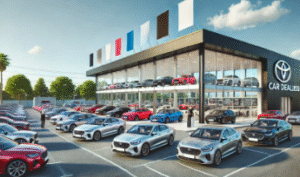
In today’s ultra-competitive automotive industry, car dealerships are under constant pressure to streamline operations, reduce costs, and deliver exceptional customer experiences. With lean inventories and tight delivery timelines, any inefficiency in the supply chain can result in costly delays, frustrated customers, and lost sales. This is where cross-docking emerges as a game-changing logistics strategy. By enabling direct transfers of goods from incoming to outgoing vehicles with minimal storage, cross-docking empowers dealerships to accelerate their processes and elevate service quality.
In this blog, we’ll explore what cross-docking is, why it matters specifically for car dealerships, the key advantages and challenges, and best practices for integrating it into automotive operations. We’ll close with a compelling conclusion that ties it all together.
—
Understanding Cross-Docking: A Logistics Masterstroke 🚚➡️🚛
What is Cross-Docking?
Cross-docking is a logistics strategy where products are offloaded from an inbound vehicle and immediately loaded onto an outbound vehicle, bypassing traditional warehousing or long-term storage entirely. Instead of spending days or weeks in storage, items “cross the dock” — moving right from one truck to another in a coordinated, time-sensitive process Penske LogisticsOlimpWikipedia.
How It Works
At a typical cross-dock facility, goods arrive, are sorted and consolidated based on destination or demand, then loaded onto outbound vehicles for rapid dispatch maersk.comchicagoshipper.com. These facilities are often designed in an “I”‑shape or similar layout to optimize the flow between inbound and outbound docks Wikipediamaersk.com.
Types of Cross-Docking
-
Continuous: Immediate transfer from receiving to shipping, ideal for high-volume, time-sensitive goods dfreight.orgmaersk.com.
-
Consolidation: Combining goods from multiple suppliers into a single outbound load dfreight.orgWikipedia.
-
Deconsolidation: Breaking down large shipments into smaller deliveries tailored to specific destinations dfreight.orgWikipedia.
-
Pre‑distribution vs. Post‑distribution: Sorting based on known destinations before or after arrival at the dock maersk.comNetSuite.
Why Car Dealerships Need Cross-Docking: The Road to Operational Excellence
1. Just‑in‑Time Delivery for Parts & Vehicles
Car dealerships often operate on tight inventory schedules. A missing part or late delivery can stall repairs, delay vehicle prep, and disappoint customers. Cross-docking enables just-in-time delivery, ensuring parts arrive and depart swiftly—landing exactly when and where they’re needed. OEMs and suppliers have utilized cross-docking to speed parts delivery to dealerships, enabling faster turnaround and higher customer satisfaction blog.anderinger.com.
2. Minimized Inventory and Storage Costs
Warehousing is expensive. Storage space, inventory carrying costs, insurance, and labor can significantly eat into margins. With cross-docking, dealerships and their supply partners can minimize or eliminate storage needs, slashing associated costs and freeing up valuable showroom or lot space Inbound Logisticsdfreight.orgmaersk.comMidwest AWD.
3. Accelerated Turnaround & Enhanced Customer Experience
Time is money. Receiving parts or prepped vehicles hours earlier can drastically reduce the wait time for service customers or new car buyers. Cross-docking speeds delivery, enhances fulfillment, and ensures products move swiftly through the system Star Distribution Systems – 3PL FloridaMidwest AWDmaersk.com. This agility translates to happier customers and smoother operations.
4. Reduced Handling & Lower Risk of Damage
Every unnecessary touch increases risk—damage, misplacement, or errors. Cross-docking cuts down manual handling and movement, reducing the likelihood of damage and ensuring parts and vehicles arrive safe and intact dfreight.orgMidwest AWD.
5. Improved Coordination with OEMs and Suppliers
Cross-docking thrives on precision. It demands tight coordination and real-time data sharing between dealerships, OEMs, suppliers, and logistics partners. Investing in such collaborative systems ultimately strengthens relationships—and resilience—across the supply chain Wikipediamaersk.comMidwest AWD.
6. Scalability and Flexibility
Cross-docking allows dealerships to scale operations up or down based on demand—without being constrained by warehousing capacity. Whether during a busy sales season or parts rush, cross-docking keeps inventory flowing smoothly maersk.comMidwest AWD.
Real-World Benefits: What Cross-Docking Brings to the Showroom Floor
| Benefit | Description |
|---|---|
| Cost Savings | Fewer storage costs, lower labor for handling, reduced inventory carrying expenses. |
| Faster Operations | Quicker delivery of parts and vehicles translates to faster service, sales, and customer satisfaction. |
| Lean Inventory | Just-in-time management reduces waste and optimizes space. |
| Damage Reduction | Minimal handling means less risk of damage during transitions. |
| Coordination & Data | Encourages real-time tracking and communication among all stakeholders. |
| Scalable Logistics | Responsive systems that adjust to fluctuating demand without over-investing in storage. |
Challenges to Keep in Mind 🛑
Cross-docking isn’t a silver bullet—it comes with its own set of challenges:
-
High Coordination Demands: Precise timing and synchronization between vendors, carriers, and internal staff are critical—any delay can derail the process dfreight.orgmaersk.com.
-
Technology & Infrastructure Needs: Real-time tracking, sorting equipment, and capable facility layouts require upfront investment maersk.comMidwest AWD.
-
Less Buffer for Disruptions: Without storage, any disruption—shipment delays, supply chain issues—can cause immediate operational hiccups Wikipediamaersk.com.
-
Initial Setup Cost: Establishing a cross-dock-ready layout, training staff, and implementing tech systems can require significant capital dfreight.orgmaersk.com.
Best Practices: Steering Toward Cross-Docking Success
-
Start Small, Pilot Smart
Begin with a specific category—like fast-moving parts—and build experience. -
Invest in Technology
Warehouse Management Systems (WMS), barcoding, IoT sensors, and logistics tracking all help maintain flow and visibility. -
Train Your Team
Staff must be adept at quick sorting, loading, and handling—speed with accuracy is key. -
Build Trust with Partners
Real-time communication with OEMs, suppliers, and carriers ensures alignment and responsiveness. -
Design a Smart Layout
Optimize the physical layout—preferably an I‑shape—for straightforward loading and unloading. -
Monitor, Measure, Improve
Track metrics like turnaround time, error rates, cost savings, and customer satisfaction to fine-tune operations.
Driving Home: The Future of Dealership Logistics
Car dealerships don’t just sell cars—they deliver experiences. In an era where speed, efficiency, and precision are non-negotiable, cross-docking offers a concrete path to operational excellence. By reducing storage needs, accelerating delivery, lowering costs, and improving coordination, cross-docking empowers dealerships to adapt swiftly—and exceed customer expectations.
While implementing a cross dock near me requires risk management, strategic investment, and operational overhaul, the long-term payoff is well worth the effort. 🚀
Ready to revamp your logistics strategy? Equip your dealership with cross-docking solutions and gear up for a faster, smarter, more profitable future.
Authority Links & Resources
-
What is Cross-Dock? Benefits & Best Practices (Maersk) 🌐maersk.com
-
Cross-Docking: Definition, Benefits, Types (Inbound Logistics) 🌐Inbound Logistics
-
Cross-Docking Fundamentals (Penske Logistics) 🌐Penske Logistics
-
Automotive Parts Delivery via Cross-Docking (Anderinger Blog) 🌐blog.anderinger.com